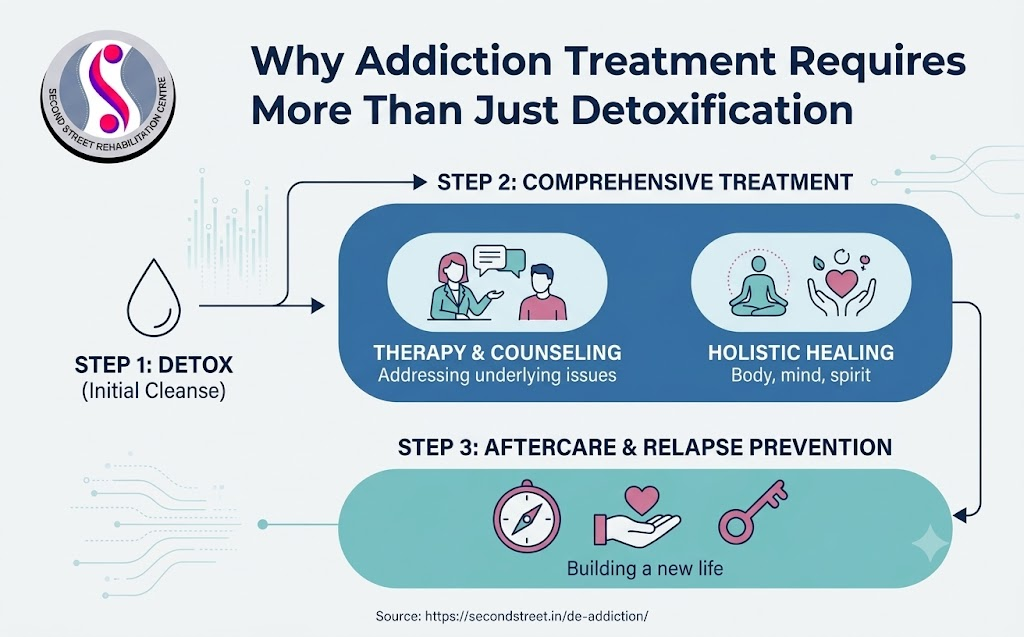
Detoxification can be medically necessary, but detox is not the same as addiction treatment. It manages the body’s immediate response to stopping or reducing a substance. The reasons a person keeps returning to alcohol or drugs usually remain after withdrawal symptoms settle.
That is why a person can complete detox successfully and still relapse within days or weeks.
What does detoxification actually do?
Its purpose depends on the substance and the person’s condition. In alcohol dependence, withdrawal can sometimes become dangerous and may require medicines and monitoring. Other substances create different withdrawal patterns. The medical team’s job is to reduce risk, treat symptoms and decide whether hospital care is needed.
The US National Institute on Drug Abuse states clearly that detoxification alone does not usually address the psychological, social and behavioural problems associated with addiction. It should be followed by assessment and treatment.
For families, that is a useful distinction. “The detox is over” means one stage is over. It does not mean the problem that brought the person to treatment has been resolved.
Why do people return to use after feeling physically better?
Because substance use becomes connected with situations. Stress after work, an argument, salary day, loneliness, poor sleep, a particular group of friends or chronic pain can all become cues. Some people also have untreated depression, anxiety, trauma symptoms or another psychiatric condition.
Once the person leaves the controlled setting, those cues return. If treatment has only focused on withdrawal, they may be physically stable but poorly prepared.
A rehabilitation and de-addiction centre should therefore explain what happens after detox. Ask about individual therapy, group work, mental-health assessment, medical follow-up, family involvement and discharge planning. The answer should be more specific than “counselling is provided”.
What should psychological treatment achieve?
It should help the person understand the pattern of use and practise alternatives. That may involve noticing cravings earlier, learning how to leave a risky situation, responding differently to conflict, challenging thoughts that justify “just once”, and planning for social pressure.
This work is not a lecture. A person who already knows drugs are harmful may still be unable to manage the urge to use after a sleepless night or a painful argument. Treatment needs to address the gap between knowing and doing.
Where does medication fit?
Depending on the condition, prescribed medicines can be part of treatment. They may be used for withdrawal, for some substance-use disorders, or for co-occurring mental-health and medical conditions. Medication decisions belong with qualified clinicians because benefits, interactions and contraindications vary.
A structured de-addiction programme should have a safe system for reviewing medicines brought from home and for monitoring new prescriptions. Families should not adjust doses because the person seems sleepy, anxious or “better”.
Why does the family matter after detox?
The home may be where old patterns restart. Families can help by making expectations clear before discharge. Who controls access to shared money at first? What happens if the person drives after drinking or drug use? How will appointments be supported? Which behaviours are unsafe for children in the home?
Families also need to avoid becoming permanent monitors. Recovery should gradually return responsibility to the person. The aim is not to create dependence on relatives instead of dependence on a substance.
Aftercare is where the treatment meets real life
A residential programme can remove many triggers for a time. The real test comes after discharge. Follow-up should be arranged before the person leaves, not suggested vaguely for “later”.
For someone living in Mumbai or Thane, practical details such as travel, working hours and evening risk periods should shape the plan. A person who works six days a week may need appointments that can actually be attended. A plan that ignores real life is easy to abandon.
If use resumes, the response should be quick assessment rather than shame. With some drugs, especially opioids, tolerance can fall during abstinence and overdose risk may rise if the person returns to a previously used amount.
When does detox need emergency-level care?
Seizures, hallucinations, severe confusion, breathing difficulty, collapse, chest pain, extreme agitation, suspected overdose or suicidal behaviour need urgent medical attention. Do not delay emergency care while waiting for a rehabilitation admission.
Detoxification matters because acute withdrawal can be uncomfortable or dangerous. Addiction treatment goes further. It works on the person’s health, behaviour, mental state, relationships and plan for the next high-risk moment. Families should expect both pieces to connect.
A useful way to judge the post-detox plan is to ask what the person will practise before leaving. Can they identify early craving signs? Have they rehearsed how to refuse an offer without prolonged argument? Is there a plan for sleep, money, old contacts and follow-up? Has the family agreed on boundaries? These are small, testable pieces of recovery. They do not guarantee abstinence, but they show that treatment is preparing for the situations in which relapse actually occurs. Detox makes the next stage possible; it should not be mistaken for the next stage itself.